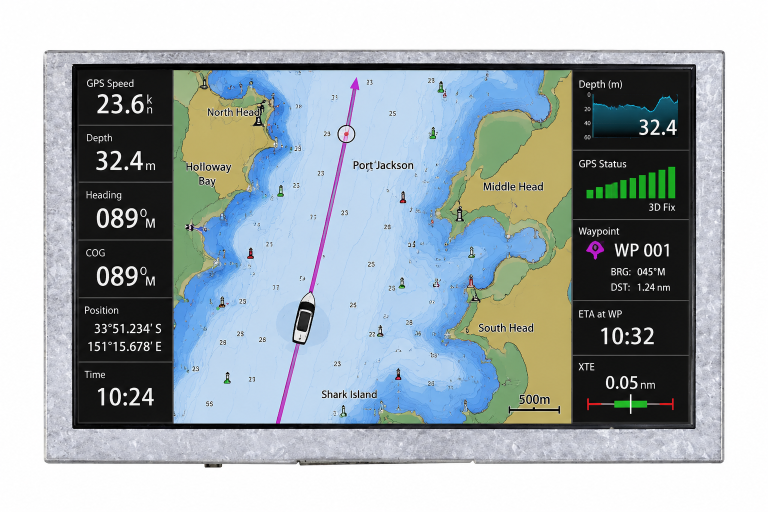
Picture this: You’re at a transit station kiosk, trying to buy a ticket or check a schedule on a screen flooded with sunlight, and instead of information, you see your reflection.
Frustrating, right?
For outdoor signage, industrial monitors, or marine displays, screen glare is an annoyance, it can ruin usability. This guide explores how to reduce screen glare, improve visibility, and future-proof display systems using sunlight readable screens.
What Causes Screen Glare?
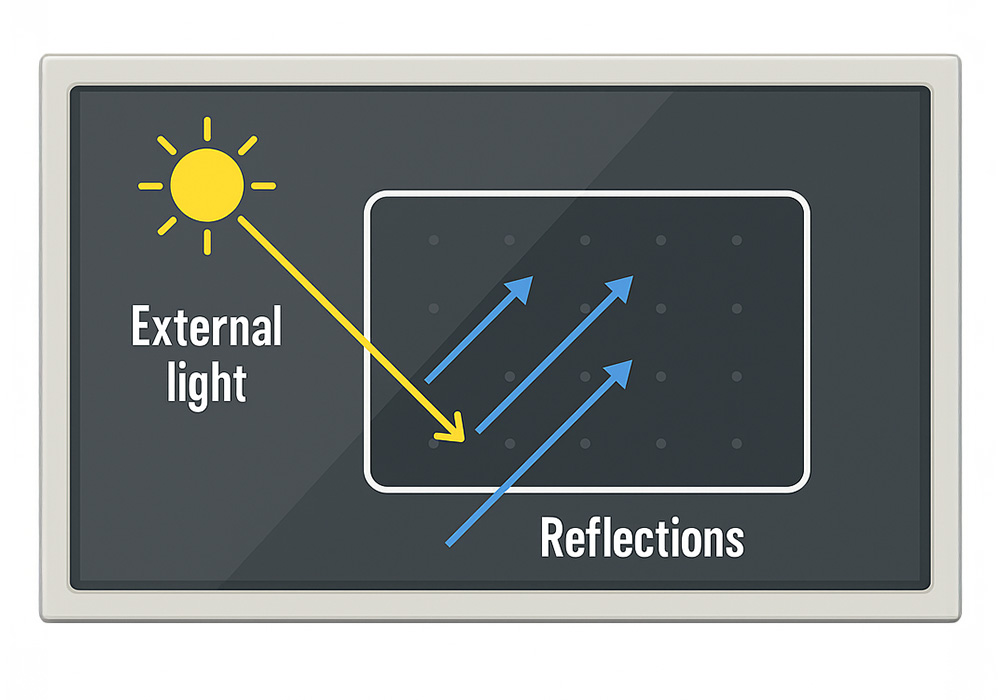
Glare is caused when external light (usually sunlight) reflects off a screen, reducing contrast and making content hard to read. Reflections act like mirrors, layering ambient visuals over your display. Together, they can render even high-resolution monitors useless outdoors.
Understanding and mitigating glare is vital in environments like public kiosks, transport hubs, outdoor digital signage, and control panels.
How to Reduce Screen Glare
Here’s how to enhance your display’s visibility outdoors or in brightly lit environments:
1. High Brightness Displays
- Shock & Vibration compliance to MIL-STD 810F
- Opt for screens with 1000 cd/m2 brightness.
- Counteracts direct sunlight and ambient brightness.
- Combine with smart brightness adjustment to manage energy use.
2. Transflective LCD Technology
- Uses ambient light to enhance the image instead of competing with it.
- Ideal for transportation displays, public info boards, and signage.
3. Optical Bonding
- Fills the gap between cover glass and panel with a clear adhesive.
- Eliminates internal refractions and condensation build-up.
- Improves contrast by up to 400%, great for marine and industrial displays.
4. Anti-Reflective & Anti-Glare Coatings
- AR coatings reduce mirror-like reflections from external light.
- AG coatings scatter reflected light for softer, diffused glare.
- Combining both works best for outdoor monitors and control screens.
Industry Applications
| Sector | Application Examples |
|---|---|
| Transportation | Ticket kiosks, digital timetables at stations or airports |
| Retail & QSR | Outdoor menu boards, interactive signage |
| Smart Cities | Wayfinding kiosks, info panels in parks or walkways |
| Marine & Navigation | Boat dashboards, dockside displays |
| Industrial Control | Manufacturing dashboards, outdoor factory displays |
Challenge
Energy drains from high brightness
Softened visuals from coatings
Environmental extremes (heat, fog)
Visual washout in direct sun
Solution
- Use adaptive lighting + transflective tech
- Select premium coatings with minimal visual degradation
- Optical bonding to prevent condensation build-up and enhance sealing
- Combine brightness, bonding, and AR layers for full-spectrum defence
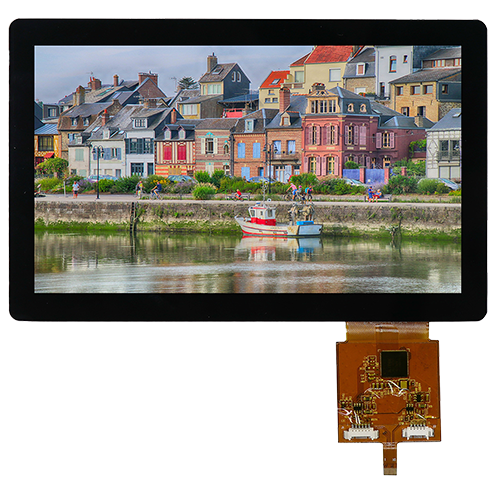
7” WVGA TFT LCD Display
Perfect for outdoor kiosks, factory floors, public transport hubs, and marine installations.
- Up to 2500 cd/m2
- Optical bonding option for clarity and durability
- Anti-reflective + anti-glare coatings option
- TTL 24-bit RGB & 8-bit LVDS interfaces
- PCAP & resistive touch
Predicted Future Trends
Future innovations in display technology are rapidly advancing to tackle glare-related challenges. Colour e-ink and reflective LCDs are emerging for ultra-low-glare digital signage, offering high readability even under direct sunlight. Smart glass and adaptive tint films are also gaining traction, allowing displays to automatically adjust their reflectivity in real time based on lighting conditions. Additionally, AI-driven layout adaptation is enhancing screen readability by dynamically adjusting on-screen elements to counter glare.
To ensure consistent clarity across environments, self-cleaning nano-coatings are being developed to maintain screen visibility and cleanliness in all weather conditions.
But this is all to come, watch this space…
Conclusion
To truly reduce screen glare and maximise readability outdoors, engineers and designers must combine:
- Hardware innovations (brightness, bonding, coatings)
- Environmental design (screen placement, hoods)
- Smart technology (AI-based contrast and brightness control)
Clearer, more effective screens lead to better user experiences, and smarter systems.